Hyperbaric Chamber Therapy: The Science of Pressure, Oxygen, and Recovery
Of everything in the modern recovery category, hyperbaric chamber therapy has the longest history and, in some ways, the most misunderstood present. It's not a new biohacking trend — physicians were building pressurized chambers before Antoine Lavoisier had even finished naming the element at the center of it all. But the current wellness market has also stretched the science further than it should, and if you've spent any time researching this category, you've likely noticed the gap between “clinically validated” and “aggressively marketed.”
This is a mechanism worth understanding properly before you invest in it, so this guide covers where hyperbaric therapy actually came from, how pressurized oxygen affects the body, what the research supports today, what it doesn't yet support, and how to think about the at-home chambers available to you.
A Brief History of Hyperbaric Medicine
The core idea — that pressurizing the air around the body can influence health — is centuries old. In 1662, British clergyman Henshaw built what he called a “domicilium,” a sealed chamber that could be pressurized above or below normal atmosphere to treat both acute and chronic conditions. It predates the discovery of oxygen itself by over a century.
The 19th century saw a wave of experimentation: French physician Junod built a chamber for pulmonary conditions in 1834, and by 1877 surgeon Fontaine had developed a mobile hyperbaric operating theater, performing dozens of surgeries under pressure. The practice reached an odd peak in 1928, when physician Orville Cunningham built a five-story, 64-foot steel sphere in Cleveland — nicknamed the “Hyperbaric Hotel” — based on a since-disproven theory that pressurized air treated everything from diabetes to cancer. It was dismantled within a decade, a useful reminder that this field has been through hype cycles before.
The turn toward modern, evidence-based use came from the U.S. Navy, which began treating divers for decompression sickness with hyperbaric oxygen in 1939. In the 1950s, Dutch surgeon Ite Boerema used hyperbaric chambers to enable complex cardiac surgery and successfully treated gas gangrene, work that helped establish hyperbaric oxygen as a legitimate medical tool. The Undersea Medical Society (now the Undersea and Hyperbaric Medical Society, or UHMS) was founded in 1967 and, by the late 1970s, had systematically reviewed the evidence to establish the list of indications still recognized by the FDA and insurers today.
How Hyperbaric Chambers Actually Work
The mechanism is straightforward physics applied to physiology. Under normal atmospheric pressure, your blood's hemoglobin is already carrying nearly all the oxygen it can hold — breathing extra oxygen at sea level doesn't add much more. Increase the surrounding pressure, though, and gas physics (Henry's Law, specifically) allows significantly more oxygen to dissolve directly into your blood plasma, independent of hemoglobin. That pressurized, oxygen-rich plasma reaches tissue that red blood cells sometimes struggle to access — which is precisely why hyperbaric oxygen is so effective for wounds with compromised circulation.
That flood of dissolved oxygen does more than just feed tissue. According to the Cleveland Clinic, it enhances the body's tissue-repair processes and strengthens the immune system's ability to fight certain infections. At the cellular level, researchers believe the pressure-and-oxygen combination triggers signaling related to new blood vessel formation and mitochondrial activity — the kind of hormetic stress-and-adapt response that shows up throughout recovery science, from cold exposure to heat.
Hard-Shell vs. Mild Chambers: A Distinction Worth Understanding
This is the single most important thing to understand before shopping in this category, because it's where marketing claims and clinical evidence most often part ways.
Hard-shell chambers are rigid, medical-grade pressure vessels operated in hospitals and wound-care centers, typically running at 2.0–3.0+ atmospheres absolute (ATA) with 100% oxygen delivered by mask or hood. These are the chambers behind the FDA-cleared indications and almost all of the clinical research. They require trained staff, cost well into six figures, and aren't something you install at home.
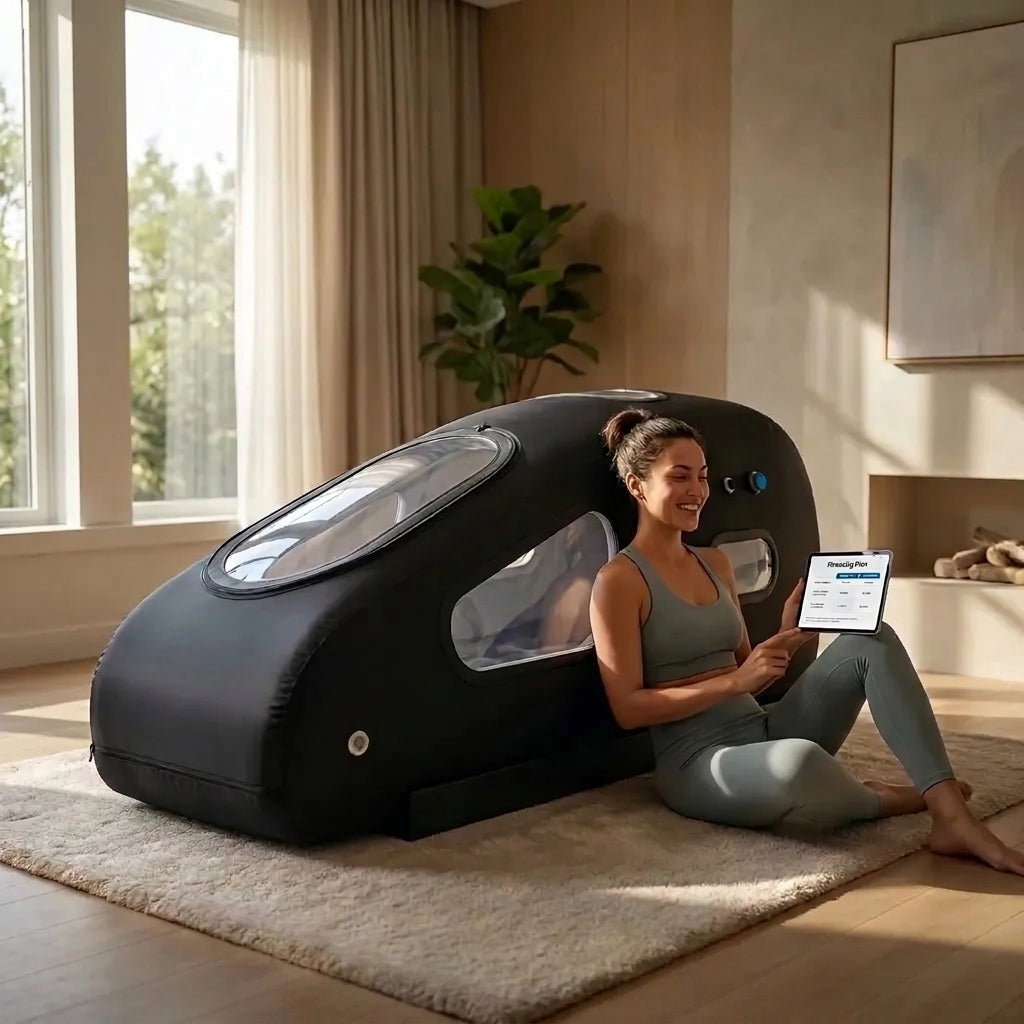
Mild (soft-shell) chambers are the portable, at-home category — flexible, lower-pressure vessels typically operating around 1.3 ATA, using ambient air concentrated with an oxygen generator rather than a pure oxygen mask. They're what most direct-to-consumer hyperbaric brands sell, and they're a meaningfully different device: lower pressure, lower oxygen concentration, and a wellness-and-recovery use case rather than a clinical one.
Why this matters: most of the research on hyperbaric oxygen, including the aging-related findings below, was conducted using hard-shell, clinical-pressure chambers. It's not yet established that a milder, at-home protocol produces the same magnitude of effect. A reputable brand — and a reputable buyer — should be honest about that gap rather than borrowing clinical research to sell a wellness device.
What the Current Research Actually Supports
FDA-cleared clinical uses. Hyperbaric oxygen therapy has a well-established evidence base and FDA clearance, through accredited hard-shell chambers, for conditions including diabetic and other non-healing wounds, carbon monoxide poisoning, decompression sickness, severe burns, radiation injury, gas gangrene, sudden hearing or vision loss, and crush injuries, according to Harvard Health and the Cleveland Clinic. These are the uses insurance recognizes and the evidence is genuinely strong.
Where the science is still emerging. The most-cited modern research on hyperbaric therapy and aging comes from a 2020 Israeli study published in the journal Aging: 35 healthy adults aged 64 and older underwent 60 sessions of hyperbaric oxygen over three months at 2.0 ATA. Researchers found measurable increases in telomere length — up to roughly 20–38% across certain immune cell types — along with a significant reduction in senescent (“zombie”) cells, some markers dropping by over 30%. It's a genuinely interesting result and one of the more rigorous studies in this space. It's also worth repeating the caveat above: this protocol used a clinical hard-shell chamber at 2.0 ATA with pure oxygen, not the milder at-home format most consumer chambers offer, and it hasn't been replicated at scale.
What the FDA explicitly warns against. Both Harvard Health and the FDA have flagged that some wellness centers market hyperbaric oxygen for conditions like Alzheimer's disease, autism, cancer, and Lyme disease — claims the FDA has not cleared or approved. If you see a hyperbaric product or provider making claims like these, treat it as a red flag rather than a bonus feature.
The honest summary: hyperbaric oxygen has a genuinely strong evidence base for specific clinical conditions, a promising but early research thread on cellular aging, and a wellness-market reputation that has, at times, run well ahead of what's actually been proven. All three of those things are true at once.
Choosing an At-Home Hyperbaric Chamber
Single-Person Portable Chamber — for a quiet, individual practice
A single-person soft-shell chamber is the more space-efficient option, typically resembling a padded, zip-entry tube long enough to lie down in. It's built for one person's regular practice — a private twenty-minute-to-hour session that requires no assistance to set up or operate.
Key things to know:
• Setup generally requires floor space roughly the size of a daybed, a nearby outlet, and no special electrical work.
• Sessions are typically done lying down, and many people read, listen to something, or simply rest.
• Because the chamber is enclosed, mild claustrophobia is worth considering in advance — most soft chambers have a clear viewing panel and an internal zipper release for exactly this reason.
Larger / Multi-Place Chamber — for a shared or higher-capacity practice
A larger soft-shell chamber offers more room — sometimes enough for a second person, a pet, or simply more comfortable movement during a session — and is a common choice for a dedicated recovery room rather than a single corner of a bedroom.
Key things to know:
• Takes meaningfully more floor space and generally benefits from a dedicated room rather than a shared living area.
• Worth confirming session capacity, interior height, and entry method before purchase — comfort inside the chamber varies more than spec sheets suggest.
• A natural fit for a household where more than one person wants to build hyperbaric sessions into their routine.
Frequently Asked Questions
Is an at-home hyperbaric chamber the same as what hospitals use?
No. Hospital and wound-care chambers are hard-shell, medical-grade devices running at higher pressure with pure oxygen, operated under clinical supervision for FDA-cleared conditions. At-home soft-shell chambers run at meaningfully lower pressure with concentrated ambient air, and are positioned as wellness and recovery tools, not medical treatments.
What does a session actually involve?
You enter the chamber, it's sealed and gradually pressurized, and you spend the session lying down — typically anywhere from 30 minutes to an hour, depending on the protocol. Most people describe mild ear pressure similar to a flight during pressurization and depressurization, which resolves with gentle equalizing (yawning, swallowing).
Can hyperbaric therapy treat [a specific medical condition]?
For the FDA-cleared indications — certain wounds, carbon monoxide poisoning, decompression sickness, and several others — yes, in a clinical hard-shell setting. For most other conditions you may see marketed by wellness providers, the evidence isn't there yet, and the FDA has specifically warned against those claims. An at-home chamber should be approached as a recovery and wellness practice, not a treatment for a diagnosed condition.
Who shouldn't use a hyperbaric chamber?
People with an untreated pneumothorax (collapsed lung), certain ear or sinus conditions, some chronic lung diseases, or who are pregnant should talk to a doctor before use. Certain medications also interact with hyperbaric oxygen. This is genuinely worth a conversation with your physician before you buy, not just before your first session.
How is a mild chamber different from the clinical research I've read about?
As covered above, most published research — including the aging and telomere studies — used clinical hard-shell chambers at higher pressures than home units provide. That doesn't mean a mild chamber offers nothing; lower-pressure protocols have their own (smaller) body of research. It does mean you shouldn't expect an at-home session to replicate hospital-grade results.
How often do people use an at-home chamber?
Protocols vary widely and there's no single validated home schedule the way there is for the clinical research above. Most people build it into a regular weekly rhythm rather than a daily one, similar to how they'd treat a sauna or cold plunge practice — worth discussing with your doctor if you're building toward a specific goal.
A Grounded Next Step
Hyperbaric therapy has survived long enough — through a literal five-story hype bubble in the 1920s — to have earned a real, evidence-backed place in medicine, alongside a wellness-market reputation it's still working to live down. The most useful thing you can do as a buyer is hold both of those truths at once: real mechanism, real emerging research, and real limits on what a home chamber can promise.
If you're weighing whether a hyperbaric chamber belongs in your recovery space, we're happy to talk through what it can realistically offer and how it fits alongside the rest of your routine.
This article is for general educational purposes and is not a substitute for professional medical advice. Hyperbaric oxygen therapy at clinical pressures is a medical treatment for specific FDA-cleared conditions; at-home mild hyperbaric chambers are wellness devices, not medical treatments. Please consult your physician before starting hyperbaric therapy, especially if you are pregnant, have a lung condition, or are managing a chronic illness.
Further Reading & Sources
• Cleveland Clinic — Hyperbaric Oxygen Therapy: What It Is & Benefits, Side Effects
• Harvard Health — Hyperbaric Oxygen Therapy: Evidence-Based Uses and Unproven Claims