Metabolic Health and Healthy Aging: Supporting Blood Sugar, Muscle, and Longevity — Including Alongside GLP-1s
Metabolic health has become the center of gravity for how people think about aging well. Blood sugar regulation, weight management, gut health, and muscle preservation used to be four separate conversations; increasingly, they're understood as one interconnected system, and one that a huge number of people are actively managing — many of them now with the help of GLP-1 medications like semaglutide and tirzepatide.
That shift has created a real and reasonable question: what else belongs in a metabolic health routine? Not as a replacement for medication, nutrition, or a doctor's guidance, but as genuine support for the parts of this picture that a prescription alone doesn't fully address — particularly the muscle mass that so many people on GLP-1 therapy are now working hard to protect.
This guide takes the same grounded approach we take with every category we cover: what's actually happening in the body, what the research supports, what's still emerging, and how specific recovery tools can realistically fit into a metabolic health and healthy-aging routine.
What's Actually Happening in the Body
Blood sugar and insulin sensitivity sit at the foundation of metabolic health. Insulin resistance — where cells respond less efficiently to insulin's signal to absorb glucose — is a slow, often silent process that precedes prediabetes and type 2 diabetes by years. Improving insulin sensitivity is one of the most consistently protective things a person can do for long-term metabolic and cardiovascular health.
Muscle mass and resting metabolism are more tightly linked than most people realize. Skeletal muscle is metabolically active tissue — it's a major driver of how many calories your body burns at rest and a key site for glucose disposal. This is also where the GLP-1 conversation has become urgent. Research on high-efficacy GLP-1 medications has found that a substantial share of weight lost during treatment is lean mass, not fat. A Mayo Clinic review of the research puts the figure at roughly 25–40% of total weight lost, with some semaglutide and tirzepatide trial data landing near the higher end of that range. Losing muscle at that scale can lower resting metabolic rate — which matters enormously given that a majority of people discontinue GLP-1 therapy within the first year and are then more vulnerable to regaining weight with less muscle to support their metabolism. Sarcopenic obesity — reaching a "normal" weight while losing meaningful strength and functional muscle — is the specific outcome clinicians are now watching for, especially in older adults and people who were relatively inactive before starting treatment.
Gut health connects to this picture too, though it's worth being precise about how. The gut microbiome influences inflammation, nutrient absorption, and even how the body regulates blood sugar — but "gut health" has also become one of the most overused, least specific phrases in wellness marketing. Supportive tools here (lymphatic massage, for instance) can genuinely help with fluid-related bloating and digestive comfort; they are not a treatment for IBS, food intolerance, or a disrupted microbiome, and it's worth being skeptical of anything that claims otherwise.
Muscle preservation, weight management, and longevity are really the same goal viewed from different angles: keep the tissue and metabolic capacity that protect you as you age, rather than just watching a number on the scale. That reframe — from "weight loss" to "body composition and function" — is the thread running through almost all current healthy-aging research, and it's exactly where GLP-1 medications, resistance training, nutrition, and the recovery tools below are meant to work together rather than in competition.
What the Current Research Actually Supports
GLP-1s and muscle loss are a real, documented concern — with a clear countermeasure. Multiple reviews of GLP-1 clinical trial data point to the same range: roughly a quarter to nearly 40% of weight lost can be lean mass. The consistent recommendation across Mayo Clinic and academic reviews is not to avoid GLP-1 therapy, but to pair it deliberately with higher protein intake (generally 1.2–1.6 g per kilogram of body weight per day) and progressive resistance training, which stimulates muscle protein synthesis in a way that aerobic exercise alone does not. Recovery tools that support circulation, muscle function, and training consistency are a genuine complement to that strategy — not a substitute for it.
Cold exposure has real, if modest, evidence for insulin sensitivity. A frequently cited clinical trial published in the Journal of Clinical Endocrinology & Metabolism found that cold exposure activating brown adipose tissue (BAT) improved peripheral glucose uptake and insulin sensitivity by roughly 20% in healthy men, without a corresponding increase in insulin secretion. Subsequent systematic reviews have generally supported BAT activation as a legitimate, non-pharmaceutical lever on glucose metabolism, though most of this research uses controlled lab protocols rather than the plunge-tub routines people build at home — a gap worth knowing about going in.
Sauna use shows measurable effects on blood sugar and insulin sensitivity. Heat exposure triggers a hyperthermic stress response that increases heat shock proteins — by as much as 49% in some studies — which are linked to lower inflammation and improved insulin signaling. In one study of adults using sauna sessions repeatedly over several weeks, fasting glucose dropped measurably; a separate study using daily hot-tub sessions in people with type 2 diabetes saw blood sugar decline alongside better sleep and reported well-being. If you use a continuous glucose monitor, it's normal to see a temporary glucose spike during a sauna session itself — that's a short-term stress response, not a sign the therapy isn't working.
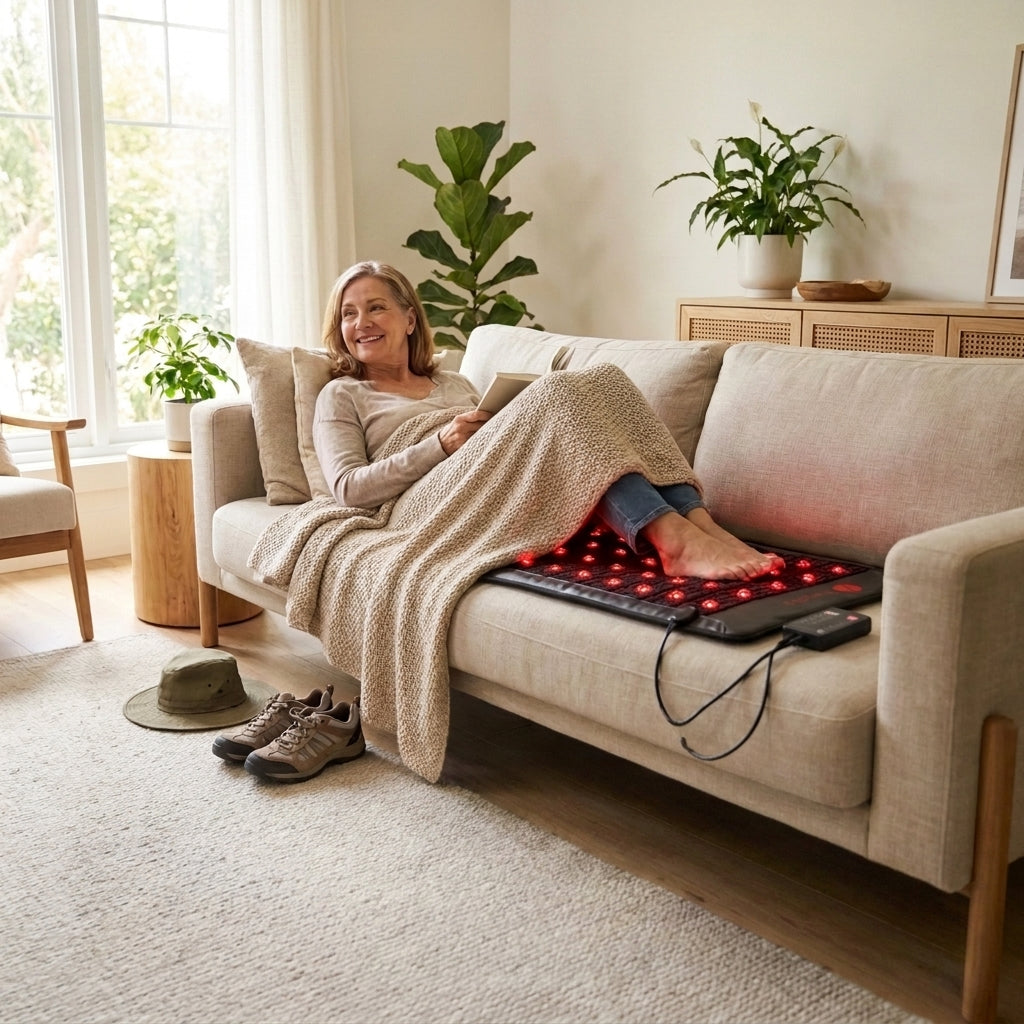
Photobiomodulation (red and near-infrared light) has a growing evidence base for muscle recovery and mitochondrial support. Research reviews on photobiomodulation therapy describe its role in skeletal muscle regeneration through improved mitochondrial function and reduced oxidative stress — the same cellular machinery that's under extra pressure when someone is losing muscle mass quickly. This is an area of genuinely active research rather than settled science, but the mechanism is well-grounded in cell biology, and it's part of why red light therapy has become popular specifically among people trying to protect muscle during rapid weight loss.
PEMF (pulsed electromagnetic field) therapy shows early but promising evidence for circulation and muscle activity. A recent study published via MDPI found that PEMF stimulation increased muscle activity during exercise in sedentary participants, and other trials have looked at PEMF's role in reducing delayed-onset muscle soreness. As with red light therapy, this is a supportive, adjunct technology rather than a stand-alone muscle-building solution.
Lymphatic massage helps with fluid-related bloating — and not much else, despite the marketing. This is worth stating plainly: lymphatic drainage techniques can genuinely ease bloating tied to fluid retention, hormonal fluctuation, or prolonged sitting. They are not a treatment for digestive disorders, gut microbiome issues, or a "detox" mechanism — the liver and kidneys already handle that job. If bloating is persistent, painful, or worsening, that's a reason to see a doctor, not a reason to book another massage.
How These Tools Can Support Your Routine
For Blood Sugar Regulation & Metabolic Conditioning: Infrared Sauna
An infrared sauna session raises core body temperature directly, triggering the same heat-shock-protein response linked to improved insulin sensitivity in the research above, alongside a cardiovascular workout similar in some respects to moderate exercise. It's one of the more evidence-supported additions to a metabolic health routine, and one of the lowest-effort — you show up, sit, and let the session do its work.
Key things to know:
• Sessions of 15–20 minutes, one to three times weekly, align with the protocols used in the research above; more isn't automatically better.
• Hydration matters — heat sessions cause real fluid loss, and that needs to be replaced before and after.
• If you use a CGM, expect a short-term glucose reading spike during the session itself; this reflects a normal stress response, not a problem with the therapy.
[Soft CTA placeholder: Link to your infrared sauna product pages here, e.g., "Explore our Infrared Saunas to find the size and setup that fits your routine."]
For Insulin Sensitivity & Metabolic Reset: Cold Plunge
Cold exposure activates brown adipose tissue, the metabolically active fat that burns energy to generate heat — and the clinical research above found that activating it measurably improved glucose uptake and insulin sensitivity. A cold plunge is the most direct at-home way to trigger that response regularly.
Key things to know:
• Most people don't need extreme cold to get a metabolic benefit; the research above used moderate cold exposure, not the coldest setting available.
• Pairing a cold plunge with sauna sessions (contrast therapy) is a popular combination, but there's no requirement to do both — either alone has its own supporting research.
• As with any cold therapy, anyone with a cardiovascular condition, uncontrolled blood pressure, or who is pregnant should check with their doctor first.
[Soft CTA placeholder: Link to your cold plunge product pages here, e.g., "See which of our Cold Plunge systems fits your space and routine."]
For Muscle Preservation (Especially Alongside GLP-1s): Red Light Therapy & PEMF
This is arguably the most timely category in this entire guide. With up to 40% of GLP-1-related weight loss coming from lean mass, tools that support mitochondrial function, circulation, and muscle activity are a genuine complement to the protein-and-resistance-training strategy clinicians recommend. Red light therapy and PEMF work through different mechanisms — light-driven mitochondrial support versus electromagnetic stimulation of circulation and muscle activity — and many people use them together as part of a broader recovery stack around their strength training.
Key things to know:
• Neither is a substitute for resistance training or adequate protein intake — the research is consistent that those two levers matter most for preserving muscle during rapid weight loss.
• Red light sessions are typically short (10–20 minutes) with no downtime, making them easy to fit around workouts or on rest days.
• PEMF mats are a passive, lie-down addition to a routine — useful on days when a full recovery session feels like more than you have time for.
[Soft CTA placeholder: Link to your red light therapy and PEMF product pages here, e.g., "Browse our Red Light Therapy and PEMF Recovery tools to build a muscle-preservation routine."]
For Circulation & Training Recovery: Compression Therapy
Preserving muscle during weight loss depends heavily on being able to train consistently — and consistent resistance training depends on recovering well enough to keep showing up. Compression therapy uses sequential pressure to support circulation and reduce the heavy, fatigued feeling in legs after training, which is part of why it's become a staple recovery tool for people building a serious strength routine.
Key things to know:
• Sessions are typically 20–30 minutes and require no active effort — you can read, work, or rest during use.
• It's a recovery aid, not a strength-building tool on its own; it supports your ability to train hard and often, rather than replacing the training itself.
• A useful complement to red light or PEMF sessions on the same recovery day.
[Soft CTA placeholder: Link to your compression therapy product pages here, e.g., "Explore our Compression Boots to support recovery between training sessions."]
For Gut Comfort & Fluid-Related Bloating: Lymphatic Massage
GLP-1 medications commonly come with gastrointestinal side effects — nausea, slowed digestion, and bloating chief among them — and general fluid retention is also just a common part of the aging process. Lymphatic massage tools are a legitimate, low-risk way to support comfort here, provided expectations are set honestly.
Key things to know:
• This is genuinely supportive for bloating tied to fluid retention, hormonal shifts, or inactivity — not a treatment for digestive disorders, IBS, or microbiome health.
• Persistent, painful, or worsening bloating is a reason to talk to your doctor, not a reason to rely more heavily on massage.
• Pairing sessions with walking, hydration, and deep breathing is consistently recommended alongside the massage itself, not instead of it.
[Soft CTA placeholder: Link to your lymphatic massage and massage chair product pages here, e.g., "See our Lymphatic Massage tools for everyday comfort and circulation support."]
For an All-in-One Longevity Investment: Longevity Capsule
For anyone ready to build a dedicated, combined-modality practice rather than assembling separate tools, a longevity capsule brings several of the mechanisms above — red and infrared light, salt therapy, and oxygen-enhanced aromatherapy — into a single enclosed session. It's a meaningfully bigger investment, both financially and in terms of space, and it's best suited to someone who has already found value in the individual therapies and wants a more streamlined, higher-capacity way to build them into a daily or weekly practice.
Key things to know:
• Sessions combine multiple mechanisms at once, which is convenient but also means it's harder to isolate which element is driving a given result — worth knowing if you like to track what's working.
• Best suited for a dedicated wellness room rather than a shared living space, given the footprint.
• A significant investment that makes the most sense once you know these categories of therapy genuinely fit your routine — many people start with one or two standalone tools first.
[Soft CTA placeholder: Link to your longevity capsule product page here, e.g., "Explore our Longevity Capsules to see how a combined therapy practice might fit your space."]
Frequently Asked Questions
Can any of these products replace my GLP-1 medication or a doctor's care?
No. None of these are medical treatments, and none of them regulate blood sugar, produce weight loss, or manage a metabolic condition the way medication does. They're supportive recovery tools meant to complement — not replace — medical treatment, nutrition, and exercise. Always work with your prescribing doctor on your treatment plan.
I'm on a GLP-1 medication. What should I prioritize first?
Based on the research above, protein intake and resistance training are the two levers with the most direct evidence for preserving muscle. From there, red light therapy, PEMF, and compression therapy are reasonable additions that support the training-and-recovery side of that equation — they work best layered on top of those fundamentals, not in place of them.
Will an infrared sauna or cold plunge actually lower my blood sugar?
The research shows measurable, real effects — glucose reductions in sauna studies, and roughly a 20% improvement in insulin sensitivity in the cold-exposure study cited above. These are legitimate physiological responses, but they're supportive effects, not a substitute for the blood-sugar management your doctor has you on. If you use a CGM, don't be alarmed by a short-term reading spike during a heat session — that's a normal stress response.
Does lymphatic massage actually help with gut health?
It helps with bloating specifically tied to fluid retention, hormonal changes, or sitting for long periods. It does not treat digestive disorders, food intolerances, or the gut microbiome, despite how it's sometimes marketed. If bloating is persistent or painful, see a doctor rather than relying on massage alone.
Do I need to buy every product in this guide?
Not at all. Think of these as tools that support different pieces of the same goal — most people start with whichever addresses their most pressing concern (often muscle preservation or recovery capacity if they're on a GLP-1, or blood sugar support if that's their primary focus) and build from there.
Is any of this necessary if I'm not on a GLP-1 medication?
Not necessary, but relevant. Blood sugar regulation, muscle preservation, and metabolic conditioning matter for healthy aging regardless of whether you're using medication — the research on sauna, cold exposure, and muscle-support therapies applies broadly, not just to people managing GLP-1 side effects.
A Grounded Next Step
Metabolic health and healthy aging aren't about chasing a single number — they're about protecting the systems, especially muscle and insulin sensitivity, that determine how well your body functions for decades to come. Whether you're building a routine around a GLP-1 medication or simply investing in long-term metabolic health, the tools that help most are the ones that support your body's own capacity: to build and keep muscle, to regulate blood sugar, and to recover well enough to keep showing up.
If you're not sure where to start, reach out — we're happy to help you think through which combination of tools fits your goals, your routine, and your stage of this journey.
[Soft CTA placeholder: "Shop our full collection of metabolic health and recovery products" linking to your relevant category/collection page.]
This article is for general educational purposes and is not a substitute for professional medical advice. GLP-1 medications, blood sugar management, and weight management should be directed by your physician. Please consult your doctor before starting any new wellness therapy, especially if you are pregnant, have a cardiovascular condition, are managing diabetes, or are currently taking a GLP-1 or other prescription medication.
Further Reading & Sources
• Mayo Clinic — GLP-1 Medications and Muscle Loss: What to Know About Nutrition and Supplements
• Veri — The Metabolic Health Benefits of Sauna
• Ubie Doctor's Note — Lymphatic Drainage Massage for Bloating: Facts vs. Hype