Article: The Recovery Suite: Why Hotels, Spas & Practices Are Adding One in 2026
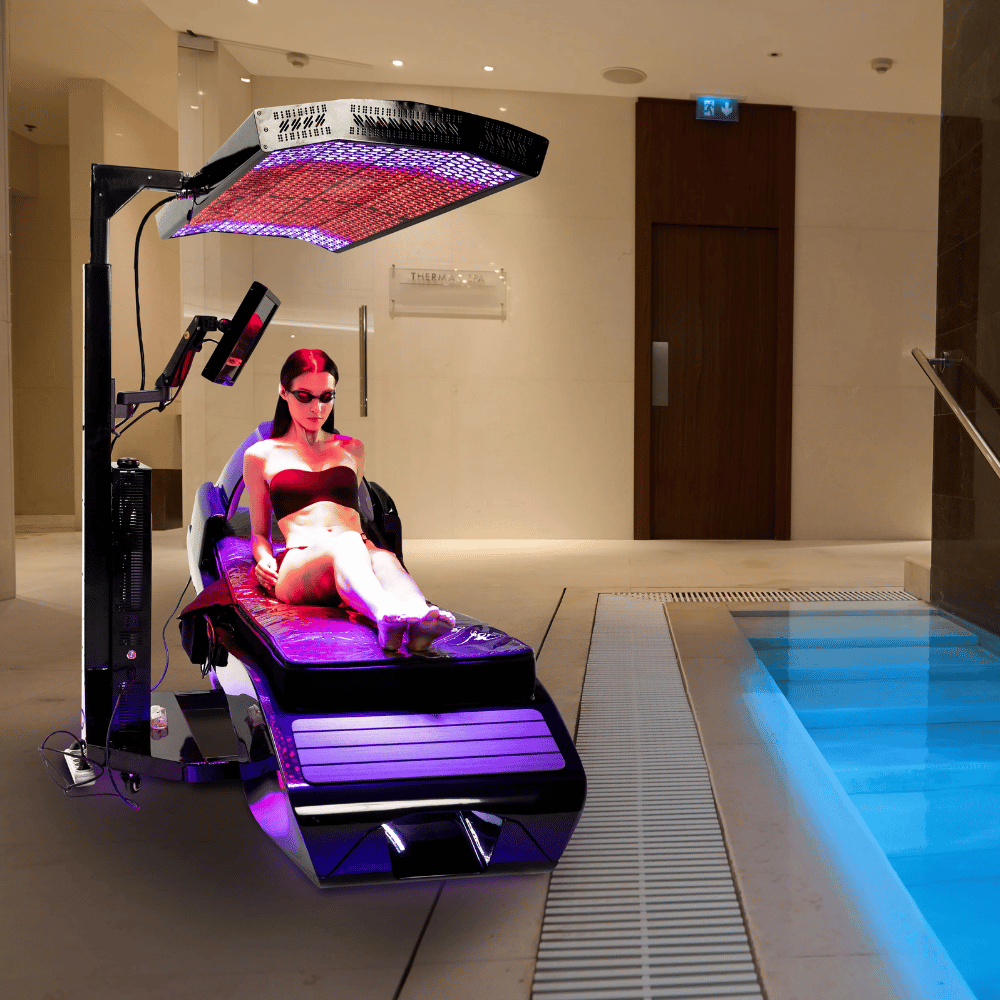
The Recovery Suite: Why Hotels, Spas & Practices Are Adding One in 2026
This one's written for a different reader than most of what's on this blog. If you're a consumer looking for a home sauna or cold plunge, the rest of our library covers that ground. This post is for the boutique hotel owner, the medspa or studio operator, and the chiropractic or PT practice weighing whether a sauna-and-cold-plunge "recovery suite" belongs in their building, and what the numbers actually say before they commit square footage and capital to it.
Three things are converging on this decision right now. First, wellness travel spending has become a real, large line item: the Global Wellness Institute tracked wellness tourism at a record $720 billion in 2019, a pandemic collapse to $436 billion in 2020, and a recovery to a forecasted $817 billion by 2022 on its way toward a projected $1.3 trillion by 2025 (Global Wellness Institute). Wellness real estate, the physical buildings and spaces built around this demand, grew 18.1% annually from 2020 to 2023, and the Institute is projecting 15.8% annual growth from 2024 to 2029 (Hotel Online). Second, hospitality operators are already testing recovery-specific concepts: Life Time has been installing cold plunge setups, boutique "sauna and plunge" venues like Othership and Arc are opening as standalone businesses, and properties like Bvlgari Spa, Surrenne at The Emory, and The HVN are adding hyperbaric and contrast-therapy offerings (Athletech News; Country & Town House). Third, and less talked about: clinical practices are feeling real financial pressure from a different direction. Medicare's physical therapy conversion factor, the dollar multiplier behind nearly every PT billing code, fell from $35.80 in 2016 to $32.35 in 2025, a nominal decline of roughly 9.7%, after peaking at $36.09 in 2020 (Physitrack). That's pushing some practices to look at cash-pay wellness add-ons as a second revenue line, not just a nice-to-have.
This post walks through what the data actually shows about recovery-suite ROI (it's more mixed than the trend pieces suggest), what a suite looks like differently for a hotel, a medspa, and a clinical practice, and the practical build-out questions, electrical, plumbing, staffing, liability, worth answering before you buy equipment.
Why Now: The Three Forces Behind the Recovery-Suite Boom
Guest and patient demand has shifted toward recovery, specifically. The wellness-travel numbers above aren't just "people like spas." Hospitality trade coverage is now describing "recovery hospitality" as its own category distinct from the traditional day spa, built around sleep, contrast therapy, and structured recovery programming rather than massages and facials alone (Hotels Mag). Luxury operators are already pricing standalone recovery experiences (sleep concierges, "vitality hour" programming, compression and thermal rituals sold as add-ons) rather than bundling them into a general spa menu.
Differentiation pressure is real in a crowded amenity market. Hydrotherapy and thermal facilities, pools, saunas, and steam rooms, are rated as high-ROI wellness features by hospitality analysts specifically because, despite high infrastructure costs, they support premium room pricing that can offset the build-out (Hotel Online). For independent and boutique properties competing against big-box chains on price, a genuinely differentiated recovery amenity is one of the few features a guest will specifically book a property for.
Clinical practices are diversifying out of necessity, not just opportunity. The Medicare reimbursement squeeze described above is compounding with billing rules like the multiple-procedure payment reduction, which cuts the practice-expense portion of additional same-day therapy codes by 50% (Physitrack). Industry coverage increasingly frames cash-pay services as one legitimate piece of a practice's response to that squeeze, alongside consolidation and staffing changes, not a replacement for covered care, but a genuine second revenue stream for patients already walking through the door (Chattanooga Rehab).
What the ROI Data Actually Shows
Here's where this guide needs to be more careful than the trend coverage usually is. There is currently no independently audited, cross-operator dataset that isolates the ROI of an in-building sauna-and-cold-plunge recovery suite specifically. What exists is a mix of qualitative industry ratings, proxy categories (general spa and thermal amenities, not recovery suites specifically), and vendor-published projections. All three are useful, none of them are a guarantee.
The qualitative hospitality data is directionally positive, but unquantified. Hospitality analysts rate hydrotherapy and thermal facilities as "high ROI" and in-room wellness amenities as supporting higher room rates, but the source reporting this gives no specific percentage return, payback period, or dollar figure for any individual feature (Hotel Online).
One widely cited 2023 data point actually complicates the simple "wellness investment equals returns" story. HotStats data found that hotels generating less than $1 million, or under 10% of revenue, from wellness actually had higher total revenue per available room (TRevPAR) growth in 2023 than hotels with major, heavily built-out wellness programs (Hotel Online). That doesn't mean wellness amenities don't work, upper-upscale properties outperformed luxury hotels across all wellness-investment sizes in the same data, suggesting execution and positioning matter more than raw capital spent. But it's a real reason to be skeptical of any claim that bigger wellness build-outs automatically produce bigger returns.
Recovery-studio economics exist, but mostly from vendors selling the equipment. One sauna-and-cold-plunge equipment company publishes illustrative numbers for a standalone recovery studio: roughly $12,000 to build a single private sauna-and-plunge suite, $100,000 to $250,000 for a full open-community build-out (2,500–3,000 sq ft, supporting up to around 600 members), and membership pricing tiers around $99 to $199 per month, producing illustrative gross revenue estimates from roughly $478,000 to $1.4 million per year at 200 to 600 members before lease, staffing, and utilities. These are worth knowing as planning inputs. They are not independently verified outcomes, and they come from a company selling the equipment, so treat them as a starting model to stress-test with your own numbers, not a benchmark to expect.
The medspa break-even logic is sound, but also has no published benchmarks yet. Medspa industry guidance frames equipment-driven add-ons (red light, sauna, cold plunge and contrast, PEMF, compression) as appealing specifically because they're low-labor and scalable without adding clinical staff, and recommends modeling break-even off your own expected utilization (25%, 50%, 75% of available sessions) against a per-session rate, rather than relying on an industry-wide average that doesn't yet exist in published form (OptiMantra).
The honest bottom line: the demand-side numbers (wellness travel spending, wellness real estate growth) are well-documented and real. The supply-side ROI numbers for a recovery suite specifically are thin, mostly vendor-sourced, directional rather than proven, and the one hard data point we found (the HotStats TRevPAR comparison) actively argues against assuming bigger is automatically better. If you build a financial model for your own location, build it from your own expected utilization and local comparable pricing, not from an industry average, because that average doesn't really exist yet for this specific category.
Segment by Segment: What a Recovery Suite Actually Looks Like
Boutique Hotels & Inns. The hospitality trend coverage above points toward programmed experiences rather than an unattended amenity: a scheduled "vitality hour," a pre-arrival recovery package bundled with the room, or a dedicated suite (sauna, cold plunge, red light, a massage chair) positioned as the reason a guest booked your property over a comparable chain hotel down the street. Because the HotStats data suggests execution matters more than raw spend, a single well-programmed suite with real staff awareness and a clear guest-facing story is a more defensible first step than converting an entire wing.
Spas, MedSpas & Studios. This is the segment where the "non-personnel revenue" argument is strongest: a sauna, cold plunge, or PEMF unit books on its own calendar, independent of a provider's schedule, which is why the medspa industry describes this category as scalable across multiple locations without adding clinical headcount (OptiMantra). The practical build here is usually a dedicated room or bay added to an existing footprint, scheduled as its own resource, with its own waiver and maintenance log, rather than a ground-up build-out.
Chiropractic & PT Practices. Given the reimbursement pressure described above, the realistic opportunity here is a cash-pay wellness bay serving patients who are already coming in for covered care, not a separate standalone business. The important compliance point, worth confirming with your own billing advisor before you launch anything: cash-pay wellness services like a sauna or compression session need to stay clearly separated from insurance-billed clinical treatment in your scheduling, documentation, and billing systems. Blending the two, or implying a general-wellness session is part of a covered treatment plan, is a compliance risk, not just an operational detail.
Building the Space: Practical Questions Before You Buy
A few build-out basics that differ meaningfully from a residential install, and that your own licensed electrician, plumber, and local building department should confirm for your specific space:
Electrical. Commercial installations typically require a dedicated circuit sized to the specific unit's power draw, installed by a licensed electrician, and GFCI protection is non-negotiable anywhere water is involved. Residential cold plunge units often run on a standard 110V GFCI circuit, but commercial-duty units and multi-unit installations commonly require higher-voltage, higher-amperage service, so confirm the manufacturer's commercial specifications rather than assuming residential numbers apply (Haven of Heat).
Plumbing and drainage. A cold plunge needs an accessible fill source and a real drainage plan for periodic water changes, a floor drain or submersible pump setup is far more practical in a commercial setting with frequent use than a garden hose, which may be workable for a single residential unit.
Ventilation and heat load. A sauna in a shared commercial space needs a ventilation plan that accounts for ambient heat and humidity affecting the surrounding room, not just the unit itself.
Permits and local code. Electrical and plumbing permit requirements vary by jurisdiction and by commercial occupancy classification, confirm with your local building department before scheduling installation, not after.
Liability and insurance. Commercial use carries different liability exposure than a personal home unit. Talk to your business insurance carrier about coverage for sauna, cold plunge, or hyperbaric use by guests, clients, or patients, and plan on waivers as standard practice regardless of segment.
Staffing model. The medspa industry's framing is useful here regardless of segment: treat the suite as its own schedulable resource with its own maintenance and consumables tracking, rather than assuming existing staff will absorb it without a defined process (OptiMantra).
A Few Honest Caveats
This is not guaranteed revenue. The HotStats data point above is real: heavier wellness investment did not automatically outperform lighter investment in 2023 TRevPAR growth. Positioning and execution appear to matter at least as much as the size of the build-out.
Most of the specific dollar projections in circulation (ours included) trace back to equipment vendors or consultancies, not independent audits. Use them as planning inputs to stress-test against your own local pricing and expected utilization, not as a promised outcome.
For chiropractic and PT practices specifically, keep cash-pay wellness services administratively separate from insurance-billed care, and have your own billing or compliance advisor review your specific setup before launch.
This article is a business planning resource, not financial, legal, tax, or regulatory advice. Confirm electrical, plumbing, permit, insurance, and billing-compliance requirements with your own licensed professionals and local authorities before purchasing equipment or beginning construction.
Frequently Asked Questions
How much space does a recovery suite actually need? A single private suite (one sauna, one cold plunge) can fit in roughly an 8' × 10' footprint as an add-on to an existing business. A full open-community build, supporting roughly 600 members, typically runs 2,500 to 3,000 square feet.
Is there a realistic, proven payback period for this investment? Not a published, independently verified one. Vendor-sourced models exist and are useful as planning inputs, but given the mixed hospitality ROI data described above, the more defensible approach is modeling break-even against your own expected utilization and local pricing rather than trusting a published average.
Can a chiropractic or PT practice bill insurance for recovery-suite time? Generally no, and you shouldn't try to. The realistic model is a cash-pay add-on for patients already in the building, kept administratively separate from insurance-billed clinical treatment. Confirm the specifics with your own billing and compliance advisor.
Should we start with a single private suite or a larger open-community model? Given that execution and positioning appear to matter more than raw capital spent in the hospitality ROI data, a single well-programmed suite is a lower-risk way to test demand and operations before committing to a larger build-out.
Do we need to hire new staff to run this? Not necessarily. The medspa industry's framing treats equipment-driven services as low-labor and schedulable as an independent resource, but someone still needs to own scheduling, cleaning, maintenance, and waivers, confirm that it's a defined responsibility, not an assumption.
What's different about commercial electrical and plumbing requirements versus a home install? Commercial-duty units and higher-traffic use commonly require higher-voltage dedicated circuits and more robust drainage planning than a single residential unit. Always confirm manufacturer commercial specifications and local code with a licensed electrician and plumber rather than assuming residential requirements apply.
A Grounded Next Step
The demand side of this trend is genuinely well-documented: wellness travel spending and wellness real estate are both growing at a real, tracked pace, and hospitality and clinical-practice operators are already building recovery-specific offerings, not just general spa menus. The supply-side ROI numbers are thinner than the trend pieces suggest, and the one hard comparative data point we found argues for smart positioning over maximum square footage, not the other way around.
If you're a hotel, spa, medspa, or chiropractic or PT practice weighing this decision, the most useful next step isn't picking equipment first, it's modeling your own numbers against your own space and expected utilization.
This article is for general educational purposes only and is not financial, legal, tax, or regulatory advice. Electrical, plumbing, permitting, insurance, staffing, and billing-compliance requirements vary by jurisdiction, business type, and individual circumstances. Please consult your own licensed electrician, plumber, local building authority, insurance carrier, and billing or compliance advisor before purchasing equipment or beginning construction, and consult a qualified financial advisor before relying on any revenue projection in this article or elsewhere.
Further Reading & Sources
- Global Wellness Institute, New Data on Wellness Tourism
- Hotel Online, What Wellness Features Provide the Best Returns?
- Hotels Mag, Recovery Hospitality Is Not a Trend: The Important Question Is Who Monetizes It First
- Athletech News, Five Trends Driving the Business of Wellness Recovery
- Country & Town House, Recovery Is the Biggest Wellness Trend for 2026
- Physitrack, Why Physical Therapists Are Burning Out: The Reimbursement Squeeze Behind It
- Chattanooga Rehab, Beyond Insurance: Why Rehabilitation Clinicians Are Embracing Cash-Pay Services
- OptiMantra, Diversifying MedSpa Revenue Without Burnout
- Haven of Heat, Electrical and Plumbing Requirements for Cold Plunge Tubs