Nervous System Regulation: What the Sauna, Red Light, and PEMF Research Reveals
For years, wellness culture pushed people toward more data: track your steps, your sleep score, your HRV, your macros. Lately the conversation has shifted. The Global Wellness Summit's 2026 trend report names "neurowellness" — nervous system regulation — as one of the defining wellness themes of the year, as people look for ways to feel calm and resilient rather than just optimized.
The phrase gets thrown around loosely, though, often as a catch-all justification for whatever product is being sold. This article takes the grounded approach: what does "nervous system regulation" actually mean physiologically, what does the research on heat, light, and electromagnetic field therapies actually show, and how do sauna, red light, and PEMF fit into a realistic routine.
What "Nervous System Regulation" Actually Means
Your autonomic nervous system runs largely outside conscious control, and it has two main branches that work in opposition. The sympathetic branch is your "fight or flight" system — it ramps up heart rate, redirects blood flow to muscles, and sharpens alertness in response to a threat or stressor. The parasympathetic branch is the counterbalance, sometimes called "rest and digest" — it slows heart rate, supports digestion, and helps the body recover once a stressor has passed.
The vagus nerve is the main channel of the parasympathetic system. As the Cleveland Clinic explains, it's the longest cranial nerve in the body, running from the brainstem down through the neck, chest, and abdomen, and it plays a central role in regulating heart rate, breathing, and the body's return to calm after stress. "Vagal tone" — often estimated through heart rate variability (HRV), the beat-to-beat variation in your heart rhythm — is used by researchers as a rough proxy for how flexibly your nervous system can shift between stress and recovery.
That's the actual biology behind "nervous system regulation": it's about how well your body moves between sympathetic activation and parasympathetic recovery, not a vague feeling of relaxation. It's also worth naming honestly that this is an emerging, fast-moving research area — some of what follows is well-established physiology, and some is early-stage evidence that's still being tested at scale.
What the Research Actually Shows
Sauna and Heart Rate Variability
Sauna's effect on the autonomic nervous system is the best-documented of the three categories here. A study published in the International Journal of Cardiology followed 93 participants (mean age 52) with cardiovascular risk factors through a single 30-minute sauna session at 73°C. Resting heart rate dropped from 77 to 68 beats per minute during the 30-minute recovery period afterward, and HRV measurements shifted in a statistically significant way (p < 0.001) — specifically, low-frequency power (associated with sympathetic activity) decreased while high-frequency power (associated with parasympathetic activity) increased during the cooldown phase (PubMed).
In plain terms: the body's post-sauna cooldown period is where the parasympathetic shift shows up most clearly — not necessarily during the heat exposure itself, but in the recovery that follows it. The researchers were careful to note that this was a single-session, acute measurement, and that larger randomized trials are still needed to confirm whether repeated sauna use produces a lasting change in baseline vagal tone, rather than just a temporary shift after each session.
PEMF and the Vagus Nerve
Pulsed electromagnetic field (PEMF) therapy is a newer entrant into this conversation, and the research is earlier-stage but growing. A 2025 double-blind, placebo-controlled study published in Electromagnetic Biology and Medicine tested neck-applied PEMF at three frequencies (6 Hz, 16 Hz, and 32 Hz) in 485 volunteers, using validated questionnaires to measure changes in sleep quality and anxiety. The 16 Hz frequency showed the most consistent improvements in both measures, while the 6 Hz setting performed no better — and in some measures worse — than placebo, underscoring that PEMF's effects appear to be frequency-specific rather than a blanket "more electromagnetic exposure equals more benefit" relationship (Electromagnetic Biology and Medicine, via PEMF Professionals summary).
An earlier, smaller study in the European Journal of Applied Physiology looked at PEMF exposure after exercise in 32 healthy men, testing several field intensities against placebo. It found a short-term, dose-dependent effect on a specific HRV component (very-low-frequency power) tied to autonomic recovery — interestingly, the lowest intensity tested produced the fastest recovery, and men who started with lower baseline autonomic activity responded most to stronger fields. The effect was temporary, fading once exposure stopped, and didn't change how participants said they felt subjectively (Springer).
The throughline across both studies: PEMF does appear to interact measurably with the autonomic nervous system, but the relationship isn't simple or linear — frequency, intensity, and a person's starting state all seem to matter, which is exactly the kind of nuance that gets lost in marketing copy.
Red and Near-Infrared Light
This is where it's important to be precise about what's actually been studied. Full-body red light therapy panels and couches are typically discussed for skin, muscle recovery, and inflammation (see the mechanisms reviewed in this photobiomodulation research summary). The research most specific to the nervous system, however, has mostly used head-directed near-infrared devices — a distinct application called transcranial photobiomodulation (t-PBM) — not full-body panels.
A pilot study published in Photobiomodulation, Photomedicine, and Laser Surgery had 15 people with generalized anxiety disorder self-administer daily 20-minute sessions with a near-infrared LED headband (830 nm, applied across the forehead) for 8 weeks. Anxiety scores on the Hamilton Anxiety Scale dropped substantially, from an average of 17.27 to 8.47 (p < 0.001), with meaningful improvements in clinical severity ratings and sleep quality as well. It was open-label with no placebo group and a small sample, so it's best read as a promising early signal rather than proof (PubMed).
A larger 2023 systematic review and meta-analysis in Frontiers in Psychiatry, covering 11 randomized controlled trials and 407 participants, found that photobiomodulation produced a moderate, statistically meaningful improvement in depression symptoms compared to controls (SMD = −0.55). Interestingly, the review found that systemic PBM — applied to acupoints or tender points on the body rather than the head — actually outperformed transcranial applications for depression symptoms specifically, though sleep outcomes showed no significant benefit either way (Frontiers in Psychiatry).
Taken together: there's a real, if still-developing, evidence base for near-infrared light affecting mood and nervous system-adjacent outcomes — but most of it comes from head-directed or acupoint-targeted protocols, not general full-body red light sessions. A full-body red light panel isn't the same tool as the devices used in these trials, even though it uses overlapping wavelengths.
How Each Product Fits a Nervous System Routine
Sauna — for a clear, well-documented post-heat parasympathetic shift
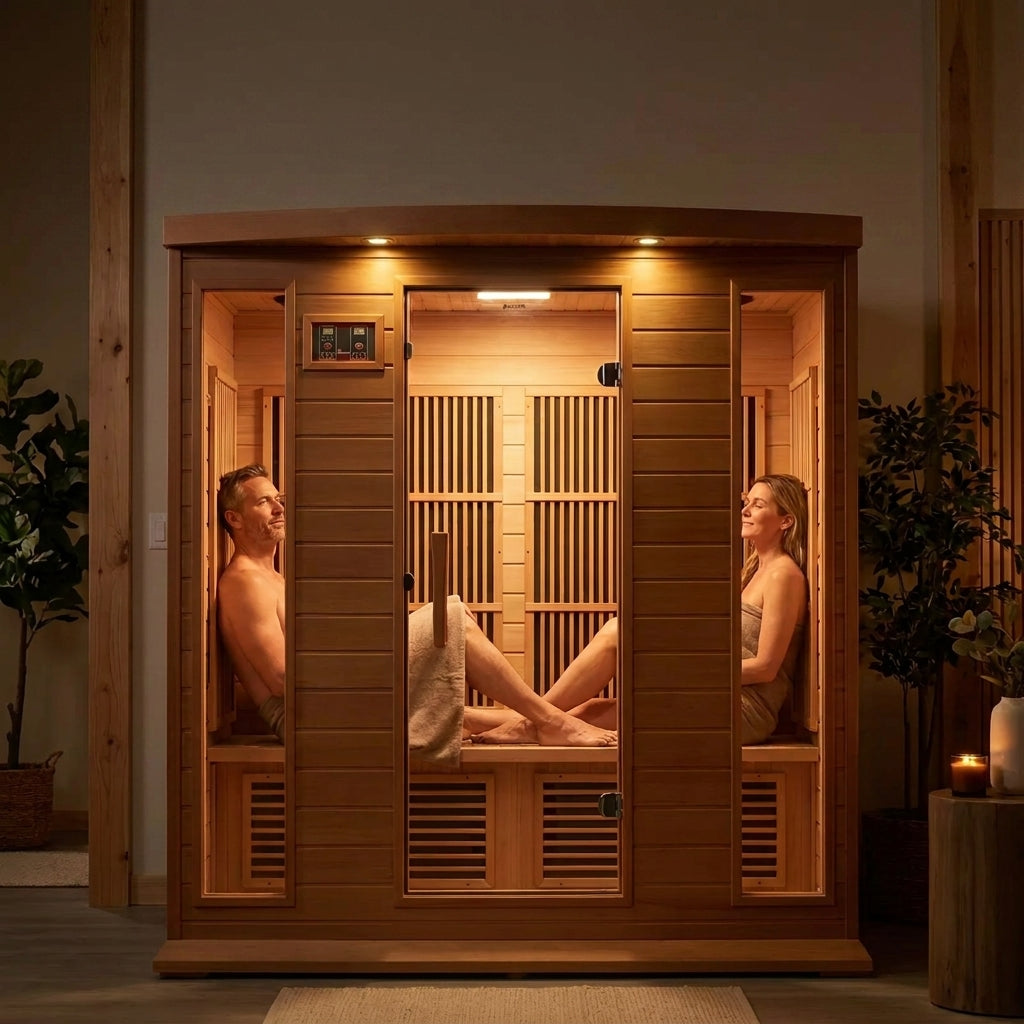
Sauna has the most consistent research behind it here, and it fits naturally at the end of a stressful day or after a workout, when the cooldown period itself seems to be where the parasympathetic benefit shows up. Browse our full sauna collection to find the right format for your home and routine.
Key things to know:
• The parasympathetic shift was most pronounced during the recovery period after the session, not necessarily during the heat exposure — don't rush the cooldown.
• The research used a single 30-minute session; there's no evidence that longer sessions produce a proportionally bigger effect.
• If you have a cardiovascular condition, talk to your doctor first — sauna places real, if usually well-tolerated, stress on the heart.
PEMF Devices — for a lower-effort, passive session
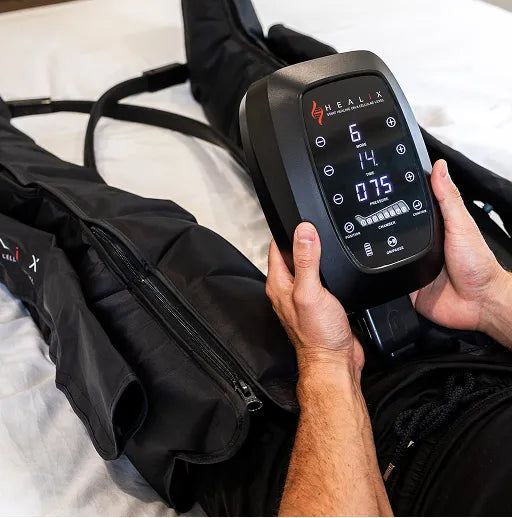
PEMF's appeal is that it requires no heat tolerance and no undressing — you can use it while working, resting, or even sleeping, which matters for people who want a nervous-system-focused practice that doesn't compete for time with anything else. See our Red Light & PEMF Therapy collection for available devices.
Key things to know:
• The frequency used appears to matter — the strongest results in the 2025 study came from a mid-range frequency (16 Hz), not the highest setting tested.
• Effects in the research were measured as short-term and session-based, not a one-time fix — consistency over time is what the studies are built around.
• This is an earlier-stage research area than sauna; treat it as a promising complementary tool rather than a proven primary intervention.
Red Light Therapy — for a general recovery and mood-support layer
A full-body red light panel or couch isn't the exact tool used in the anxiety and depression trials above, but it works through the same underlying photobiomodulation mechanism and is well-studied for muscle recovery, circulation, and inflammation, which are themselves connected to how rested and resilient the nervous system feels day to day. Explore our Red Light & PEMF Therapy collection and Recovery Therapy collection for options that complement your sauna routine.
Key things to know:
• If nervous-system-specific benefit is your primary goal, the strongest research used head-directed or targeted acupoint devices — worth knowing so expectations are set accurately for a full-body panel.
• Sessions in the underlying research were short (10–20 minutes) and don't require any recovery period afterward, unlike sauna.
• Many people use red light sessions alongside sauna or PEMF rather than as a replacement for either.
Frequently Asked Questions
Is "nervous system regulation" a real, measurable thing, or just a marketing phrase?
Both, depending on how it's used. The underlying physiology — the balance between sympathetic and parasympathetic activity, often estimated through HRV — is real and measurable. The phrase becomes marketing when it's used vaguely to sell a product without pointing to what's actually been studied, which is why this guide tries to name the specific research behind each tool.
Which of these three has the strongest evidence?
Sauna's effect on heart rate variability is the most consistently documented, based on a well-designed study with a meaningful sample size. PEMF and near-infrared light both have real, published research, but it's earlier-stage — smaller studies, open-label designs in some cases, and in PEMF's case, effects that appear highly dependent on the specific frequency used.
Can these tools replace therapy or medication for anxiety?
No. None of the studies referenced here compared these tools against established anxiety or depression treatments, and none were designed or intended to replace professional mental health care. They're best understood as complementary tools that may support a broader nervous system-focused routine, not substitutes for diagnosis and treatment from a qualified provider.
Do I need to use all three to see a benefit?
No — the research on each was conducted independently, and there's no study showing that combining sauna, PEMF, and red light produces a bigger effect than any one alone. Many people layer them for practical reasons (different tools fit different times of day or energy levels), not because the research specifically supports stacking them for nervous system outcomes.
How would I know if it's actually working for me?
Outside a lab, most people don't have access to the HRV equipment researchers use. Simple, honest markers — how quickly you feel calm after a stressful day, sleep quality, and how you generally feel day to day — are reasonable, if imprecise, ways to gauge whether a routine is working for you personally. Some people also track HRV with a wearable, though the research above didn't use consumer wearables to measure its results.
Is any of this risky?
Each modality carries its own standard precautions: sauna isn't recommended for people with uncontrolled cardiovascular conditions without medical guidance; PEMF isn't recommended for anyone with a pacemaker or other implanted electronic device; and photosensitizing medications are worth discussing with a doctor before starting light-based therapies. None of the studies referenced above reported serious adverse events, but "well-tolerated in a research setting" isn't the same as "appropriate for everyone."
A Grounded Next Step
"Nervous system regulation" is a real physiological process, and there's genuine, published research behind sauna, PEMF, and near-infrared light as tools that interact with it — sauna's HRV research being the most mature, with PEMF and red light following behind with smaller but real studies. None of it supports treating any of these tools as a cure, and all of it is honest about needing larger, longer trials before the picture is fully settled.
If you're building a routine around feeling calmer and more resilient day to day, we're happy to help you think through which tool — or combination — makes sense for your schedule, your space, and how your body actually responds.
Shop Saunas Shop Red Light & PEMF Shop Recovery
This article is for general educational purposes and is not a substitute for professional medical or mental health advice. Sauna, PEMF, and red light therapy are complementary wellness practices, not treatments for anxiety, depression, or any diagnosed condition. Please consult your physician before starting any new therapy, especially if you have a cardiovascular condition, an implanted electronic device, are pregnant, or are taking photosensitizing medication.
Further Reading & Sources
• Global Wellness Institute — Global Wellness Summit Releases 10 Wellness Trends for 2026
• Cleveland Clinic — Vagus Nerve: What It Is, Function, Location & Conditions
• PubMed — Recovery from Sauna Bathing Favorably Modulates Cardiac Autonomic Nervous System
• PubMed — Mechanisms and Applications of the Anti-Inflammatory Effects of Photobiomodulation